BIM Information Lifecycle Management
Connected BIM
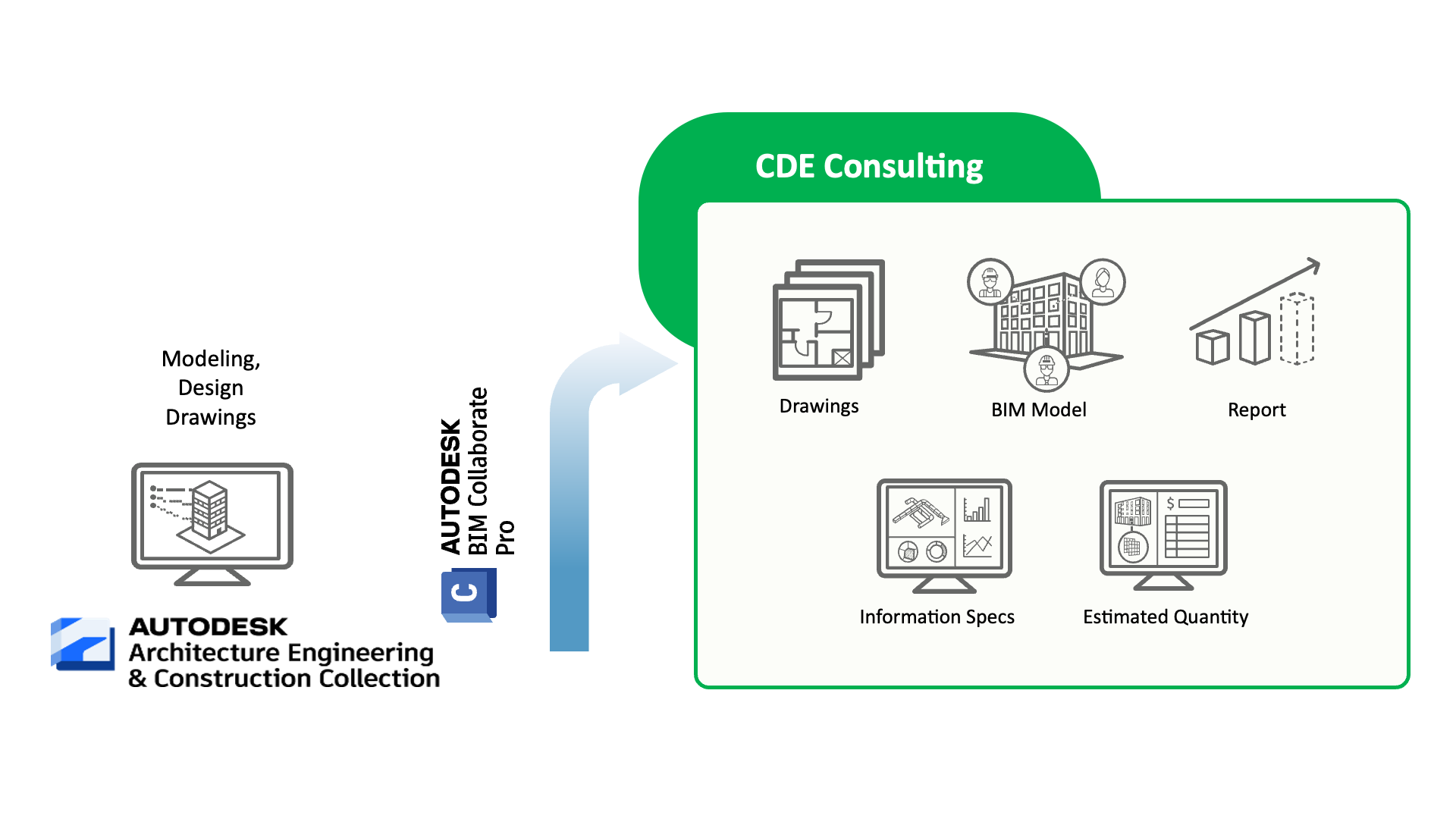
The development of data science has brought significant advancements to the construction industry. Now, BIM is no longer just a 3D model containing information but a data-driven network—a seamless and efficient system that connects all project stakeholders.
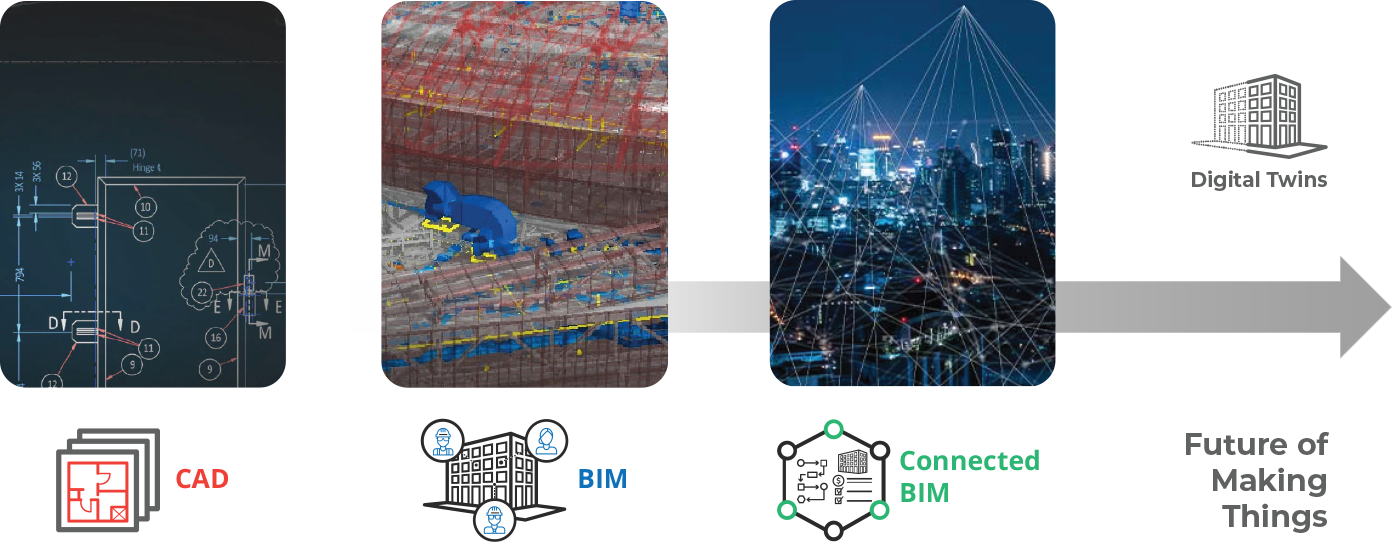
From CAD to BIMThe Era of Optimization
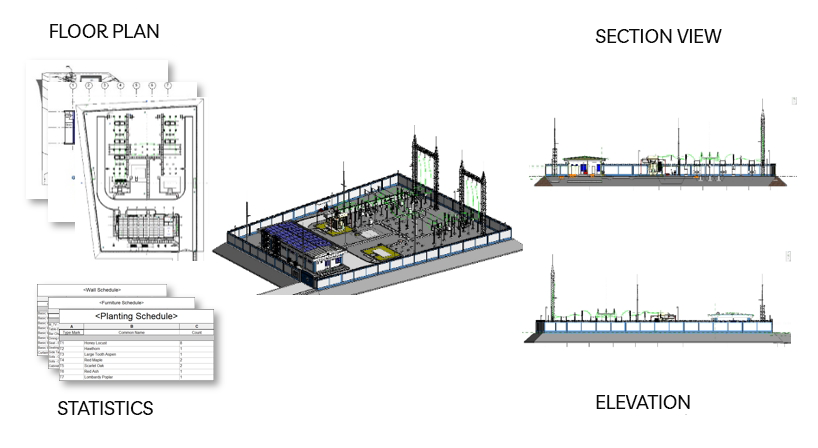
The advancement of computer hardware and graphics technology has unlocked tremendous potential for the construction industry by transitioning from 2D drawings to 3D models. This evolution led to the emergence of BIM, establishing it as an efficient process for project execution.
The 3D BIM model enables multiple stakeholders to collaborate on a single model, extract and synchronize 2D drawings with the 3D model. Additionally, it facilitates simulation, analysis, and design optimization before construction begins.
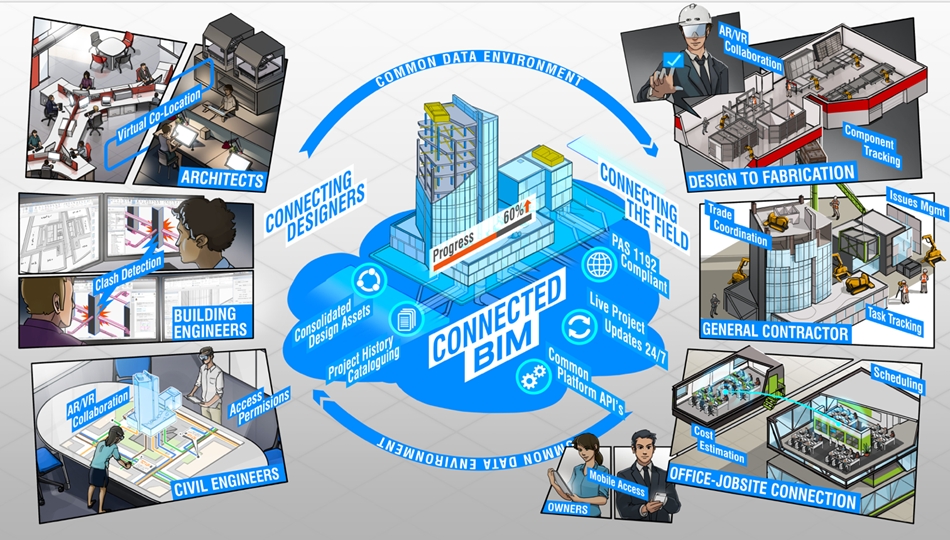
Connected BIMThe Era of Connectivity
The BIM process delivers undeniable value to projects, especially in terms of information management. As a result, a vast amount of data is generated, including records of discussions, submissions, and update processes,… this data also becomes a valuable asset that investors need to retain.
To manage this vast amount of information, combined with the rapid advancement of cloud computing, Common Data Environment (CDE) platforms have emerged. These platforms ensure that all data is systematically stored in a single, reliable source (Single Source of Truth), enabling seamless handover to investors and efficient data retrieval.
Digital TwinsThe Results of Connected BIM
The investor owns a Digital Twin of the project, which includes the as-built model and all critical information updated throughout each phase.
The Digital Twin serves as a valuable asset for the efficient handover of a BIM-enabled project, enabling investors to continue leveraging the model for the operational phase.
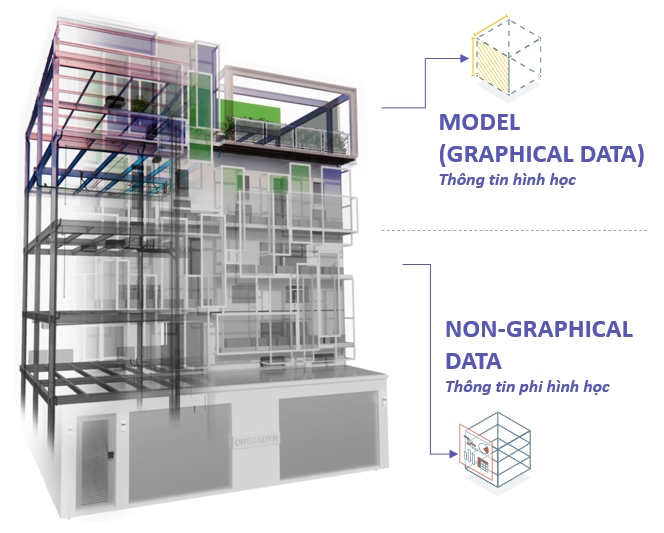
Connected BIM= BIM+ CDE
Implementing Connected BIM Across Project Phases
To effectively implement a Connected BIM solution, the investor must own a “Site” (*) within a Common Data Environment (CDE) and serve as the initiator and administrator of the project, starting from the very first documents.
(*) A Site on the CDE can be understood as a building that houses all the investor’s data. The investor grants access keys to each floor (project) and each room (folder) for departments, organizations, and individuals involved in the project. This ensures that data reaches the right people at the right time while remaining under the investor’s control.
AProject Documentation Initialization
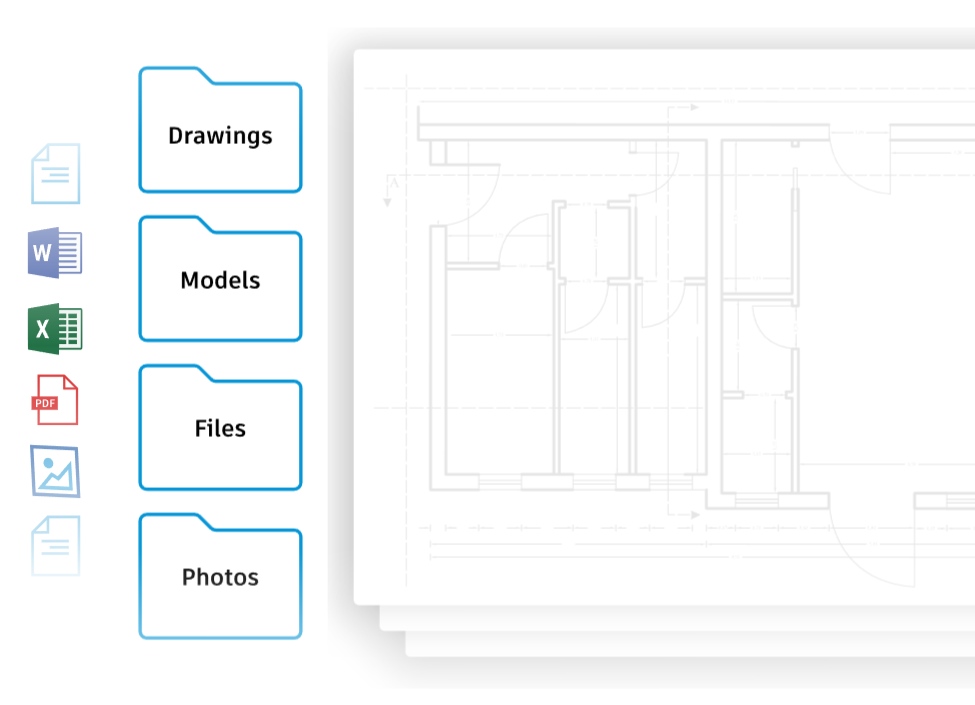
The invester will initiate a new project on their CDE Site, set up directories, and assign access permissions for departments to participate in the CDE. This ensures that project data is delivered to the right people at the right time.
Establishing digital approval workflows allows data to pass through review stages and be stored in the release folder after the final approval.
Achieved Outcomes:
- Data is centrally stored in a digital format, enabling easy search and version tracking while minimizing the risk of data fragmentation.
- Digitizing the document approval process.
- Tracking and recording all actions and decisions.
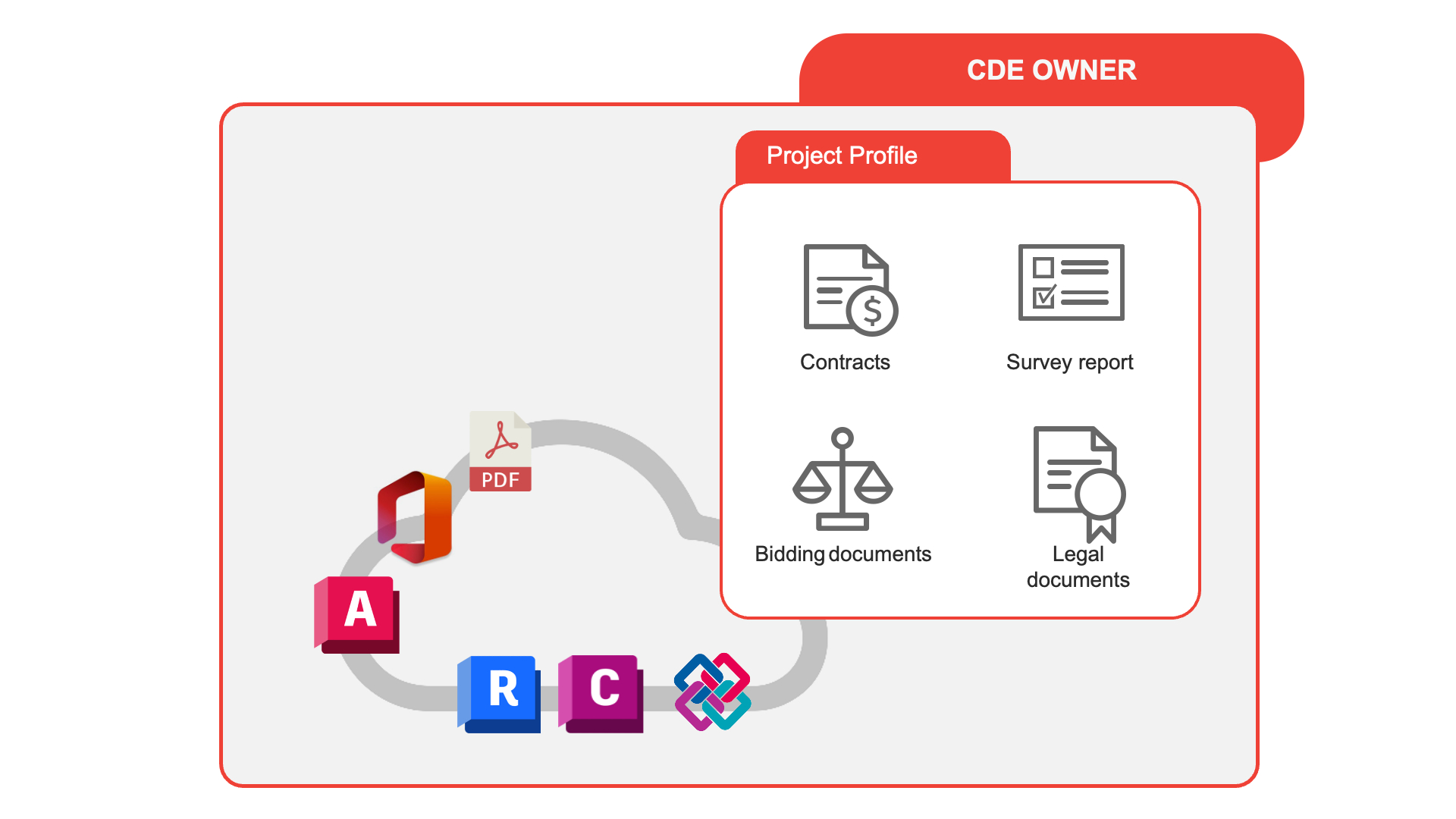
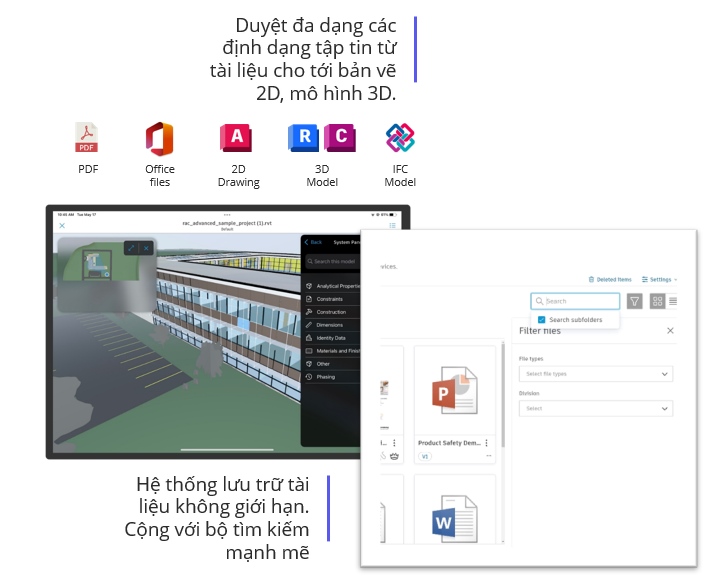
Storing all relevant documents and records.
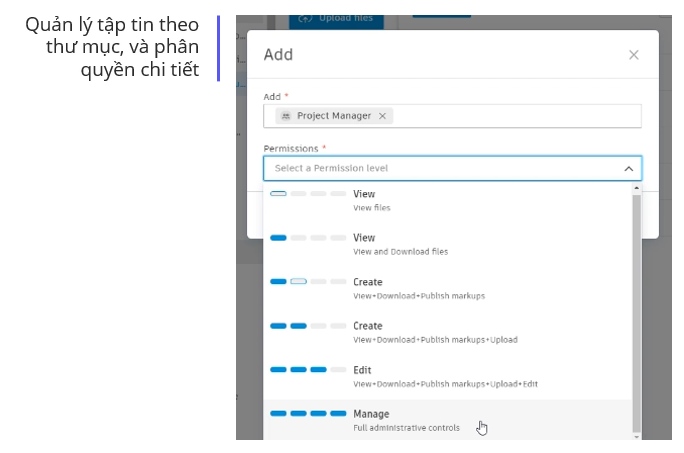
Assigning data security permissions for each department and individual
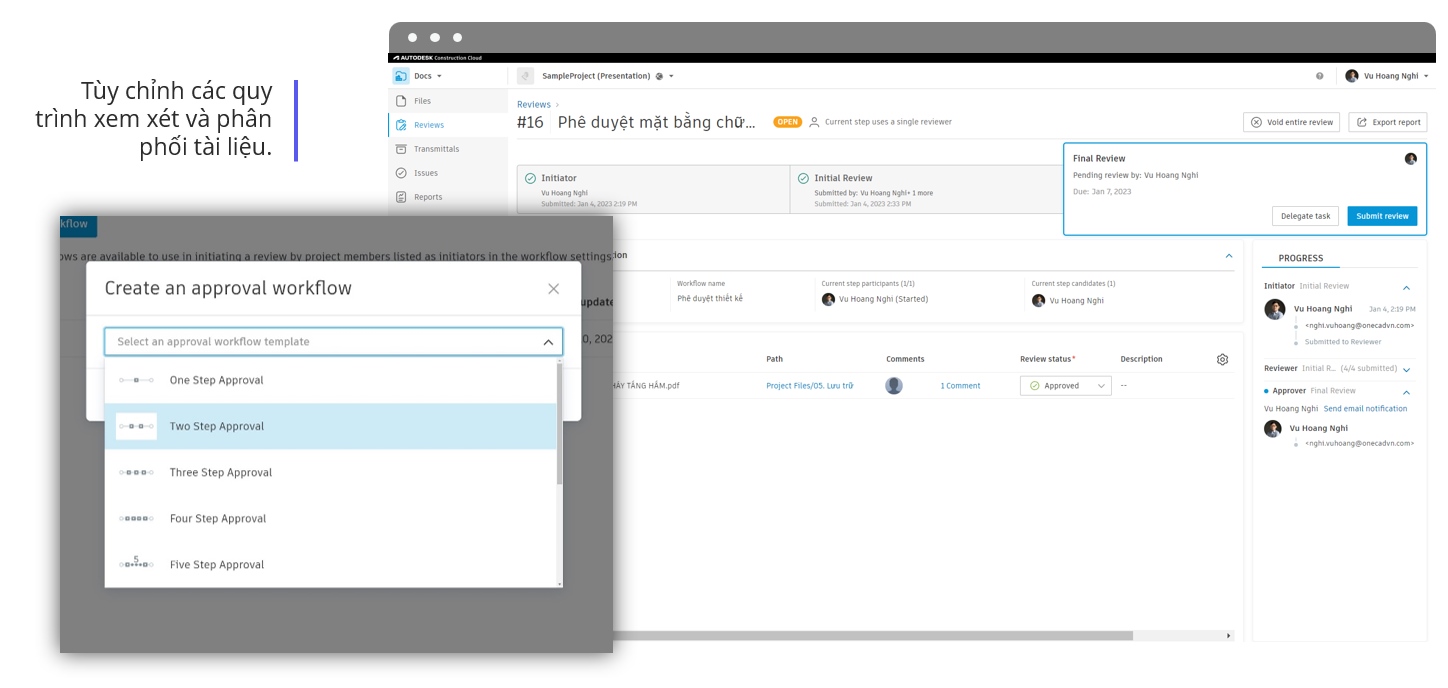
Digitizing the document approval workflow
BDesign Phase
B.1 Design Collaboration
The design consultants will work and synchronize their models on their CDE, collaborating with other consultants (if applicable) to create a complete set of documents that meet the investor’s requirements.
The CDE facilitates model synchronization from design software such as Revit and Civil 3D into a unified storage environment. This ensures data integrity, version control, and seamless collaboration.
Achieved Outcomes:
- Strict version control of design data
- Creating a seamless environment for collaboration among stakeholders
- Reducing storage costs and enhancing data security
- Minimizing repetitive tasks and reducing project costs
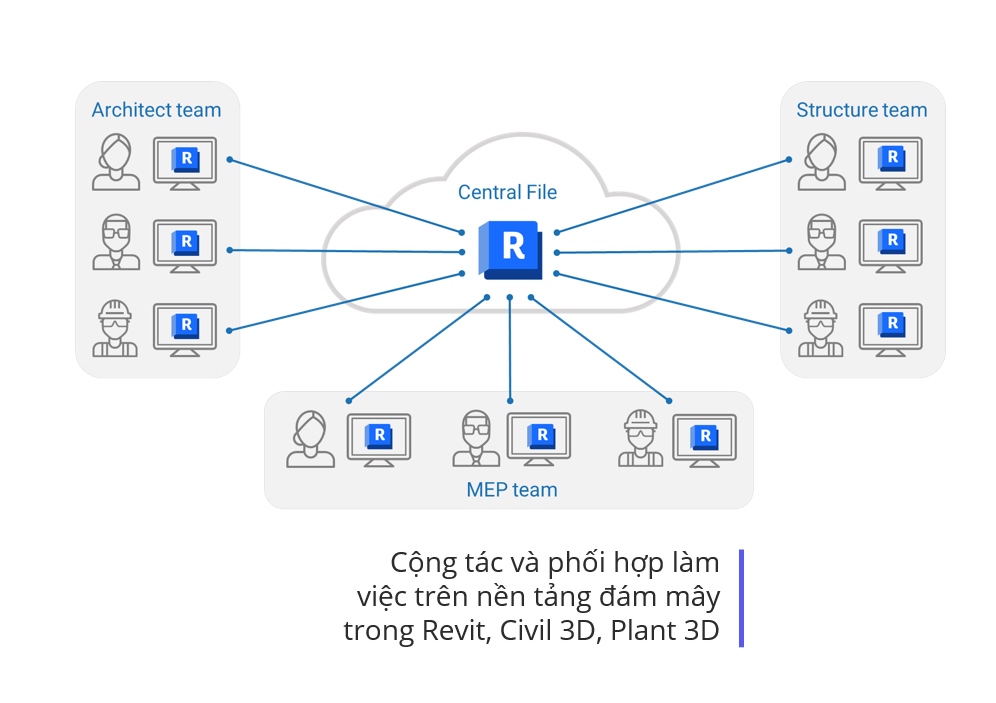
Cloud-Based Collaboration (Revit Cloud Worksharing, Civil 3D)
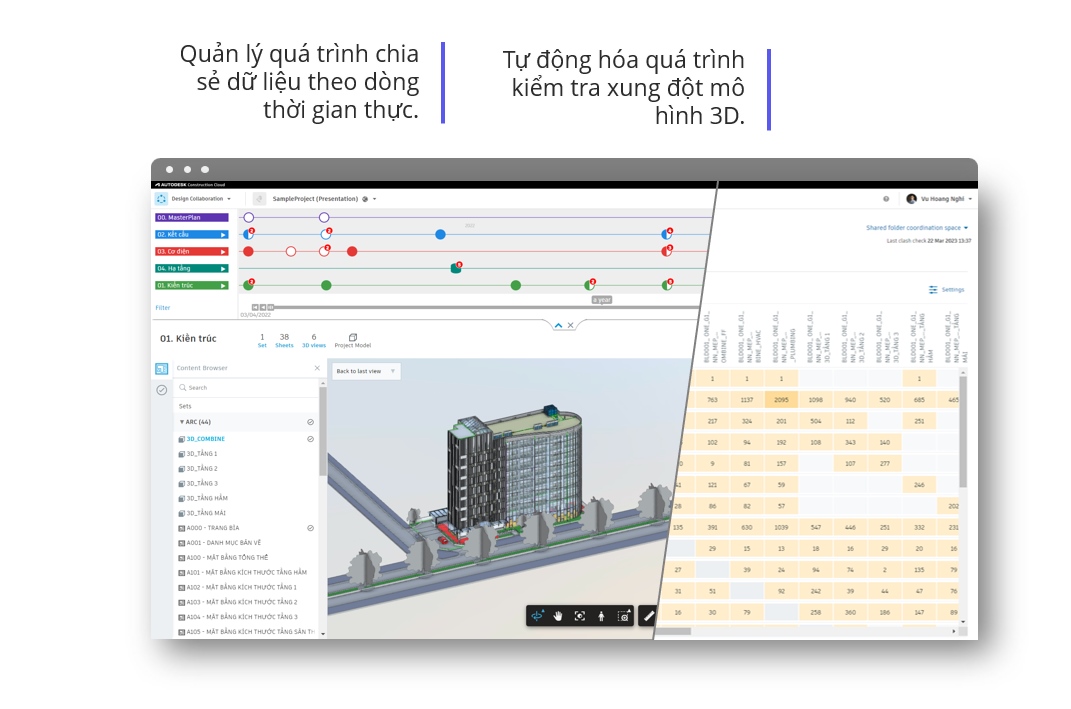
Assigning data security permissions for each department and individual
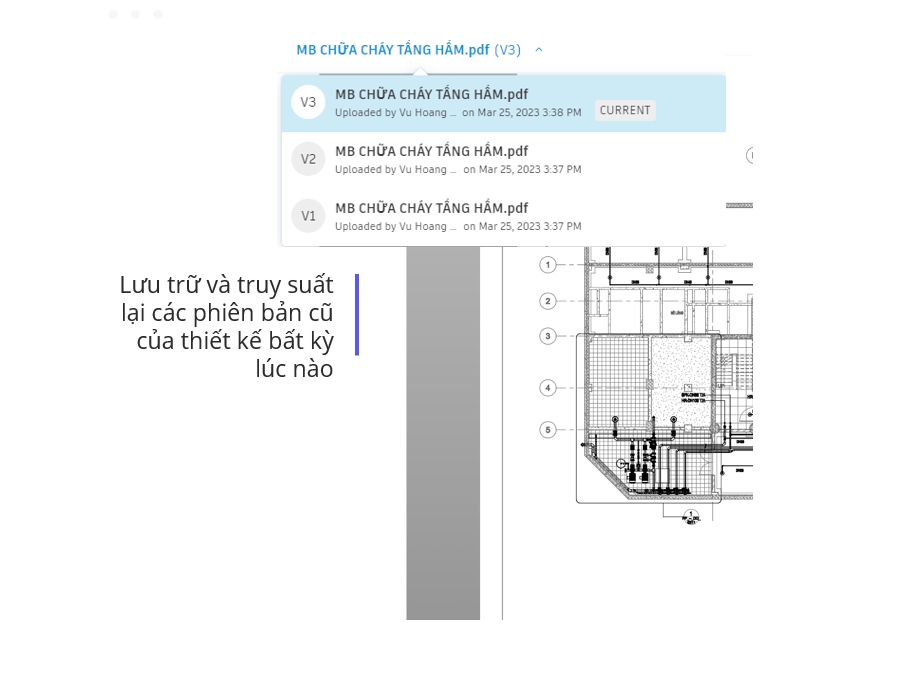
Storing all versions of design files
B.2 Design Document Management
The investor creates dedicated folders on their CDE to store design documents and grants access permissions for the design consultants to synchronize files.
The investor can directly use the CDE via a web platform to review documents, including 2D drawings and 3D models. They can also check for model conflicts, validate drawings generated from models, and compare changes between file versions.
Achieved Outcomes
- The investor owns the data on their CDE Site, ensuring that all documents are always updated to the latest version.
- A platform for viewing drawings and models without the need for offline software or high-end computer configurations.
- Allows tracking of changes between different versions of the same file, simplifying and enhancing version control efficiency.
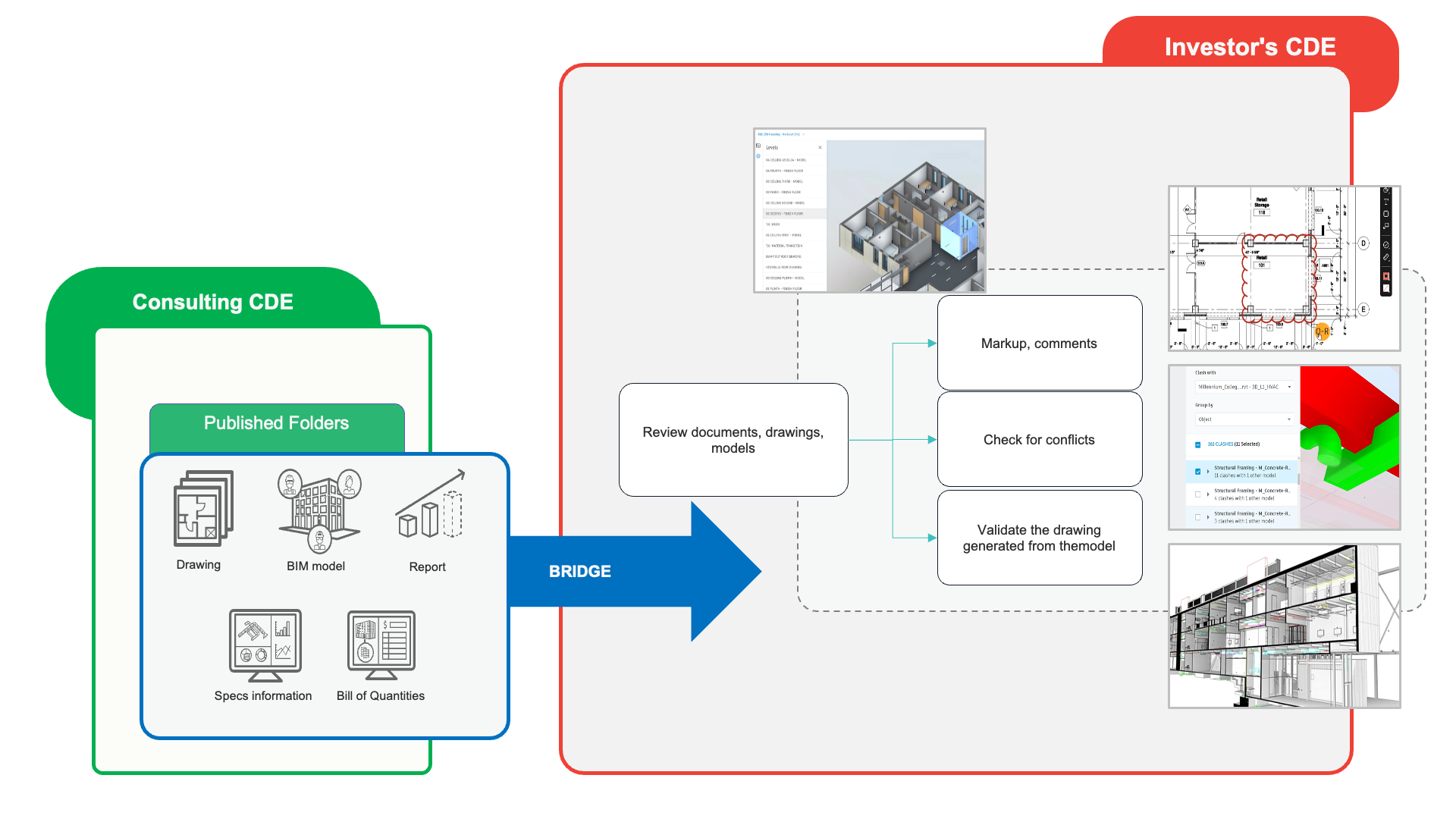
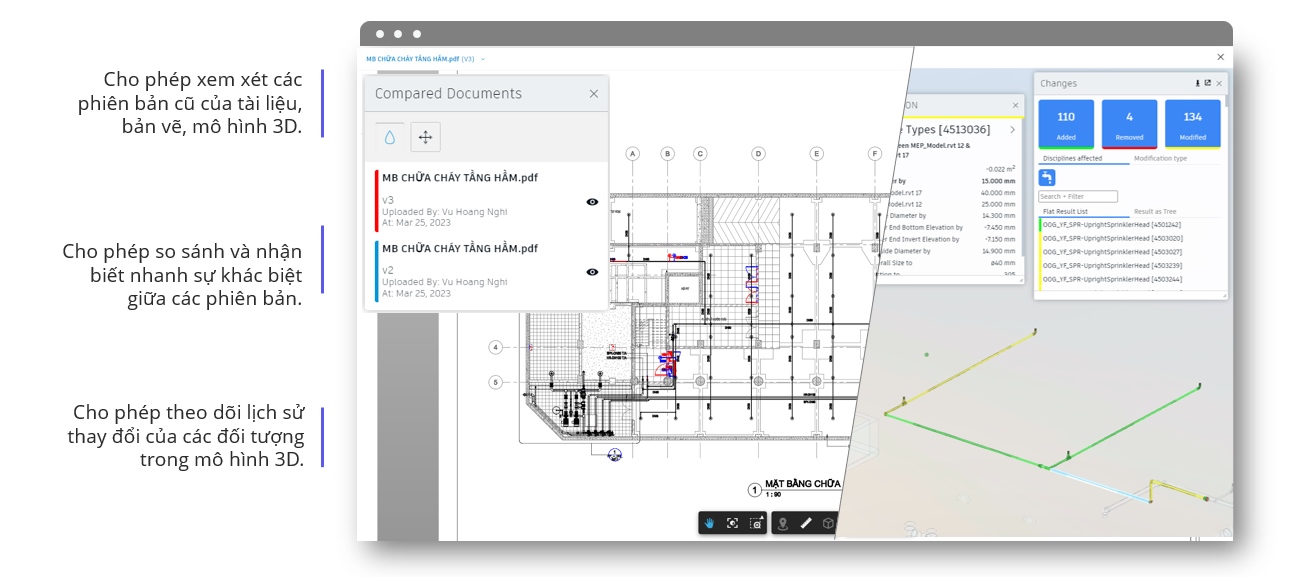
Review 3D models and drawings directly on a web browser or mobile application.
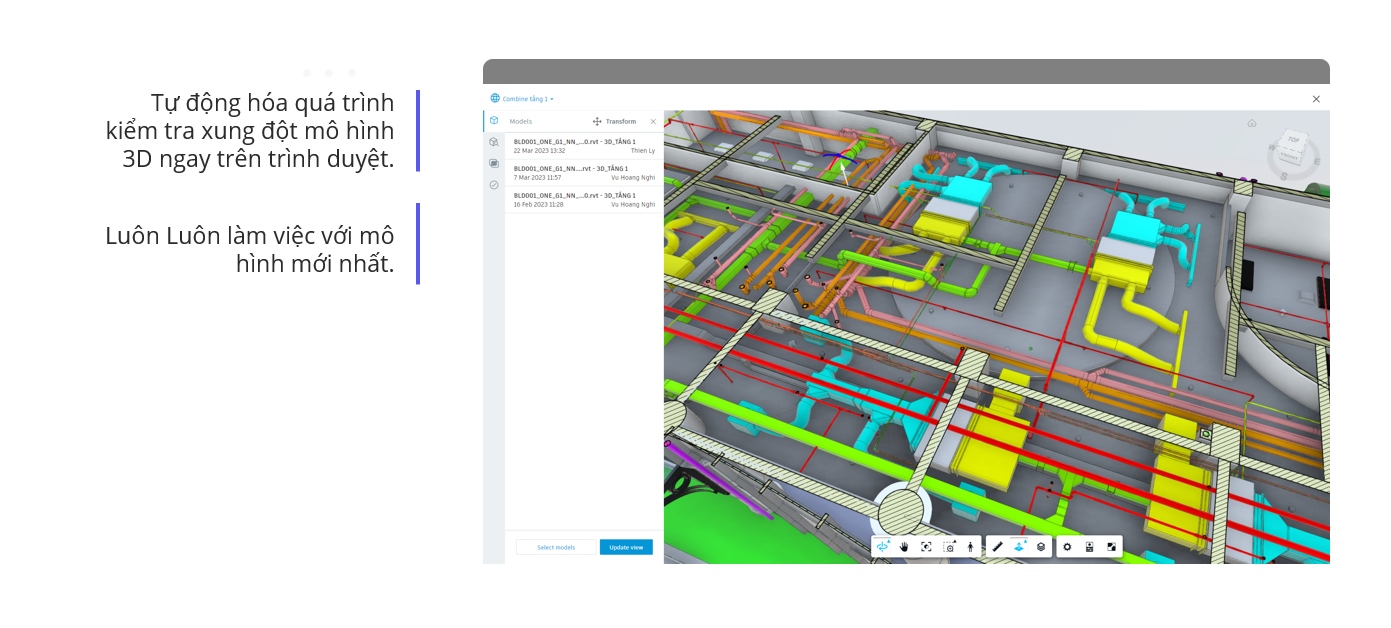
Assign data security permissions for each department and individual
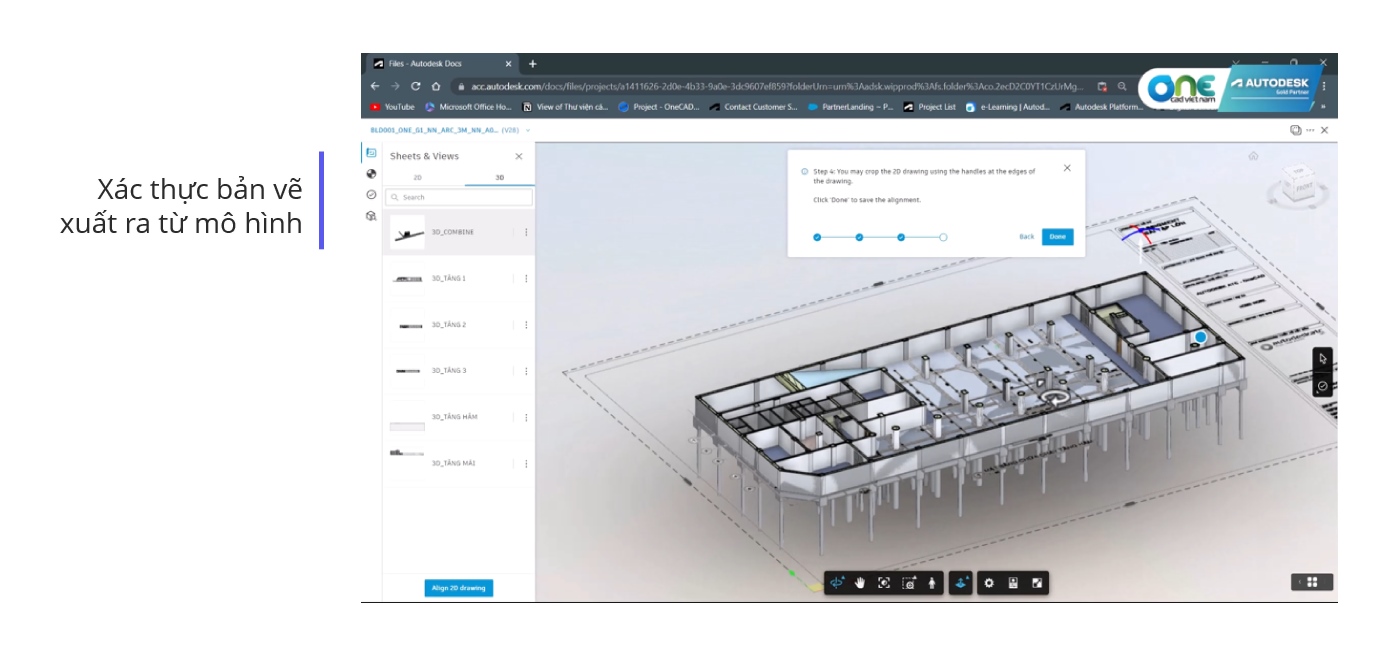
Validate drawings generated from the model.
B.3 Feedback and Discussion on Design Documents
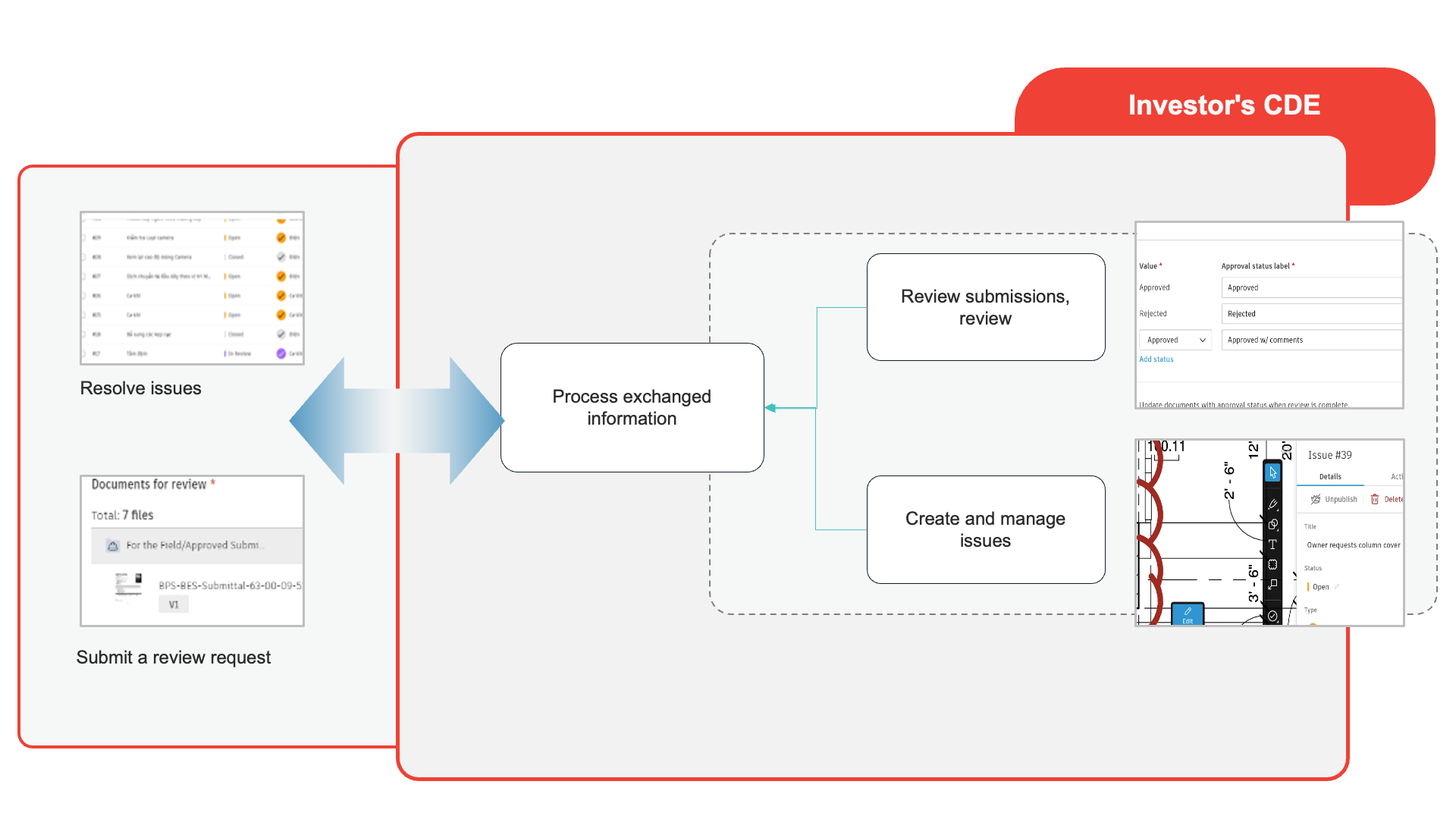
After reviewing and approving the documents, the investor can use issue-tracking tools to create issues with markups and send feedback to the design consultants.
All discussions are stored in a centralized environment, allowing stakeholders to track update statuses efficiently.
Achieved Outcomes:
- Creating a centralized communication environment that enables stakeholders to focus on refining design documents without wasting time searching for or losing files.
- Stakeholders receive information quickly and comprehensively, with issues clearly marked on drawings and models.
- Stakeholders clearly understand their assigned tasks and provide focused feedback.
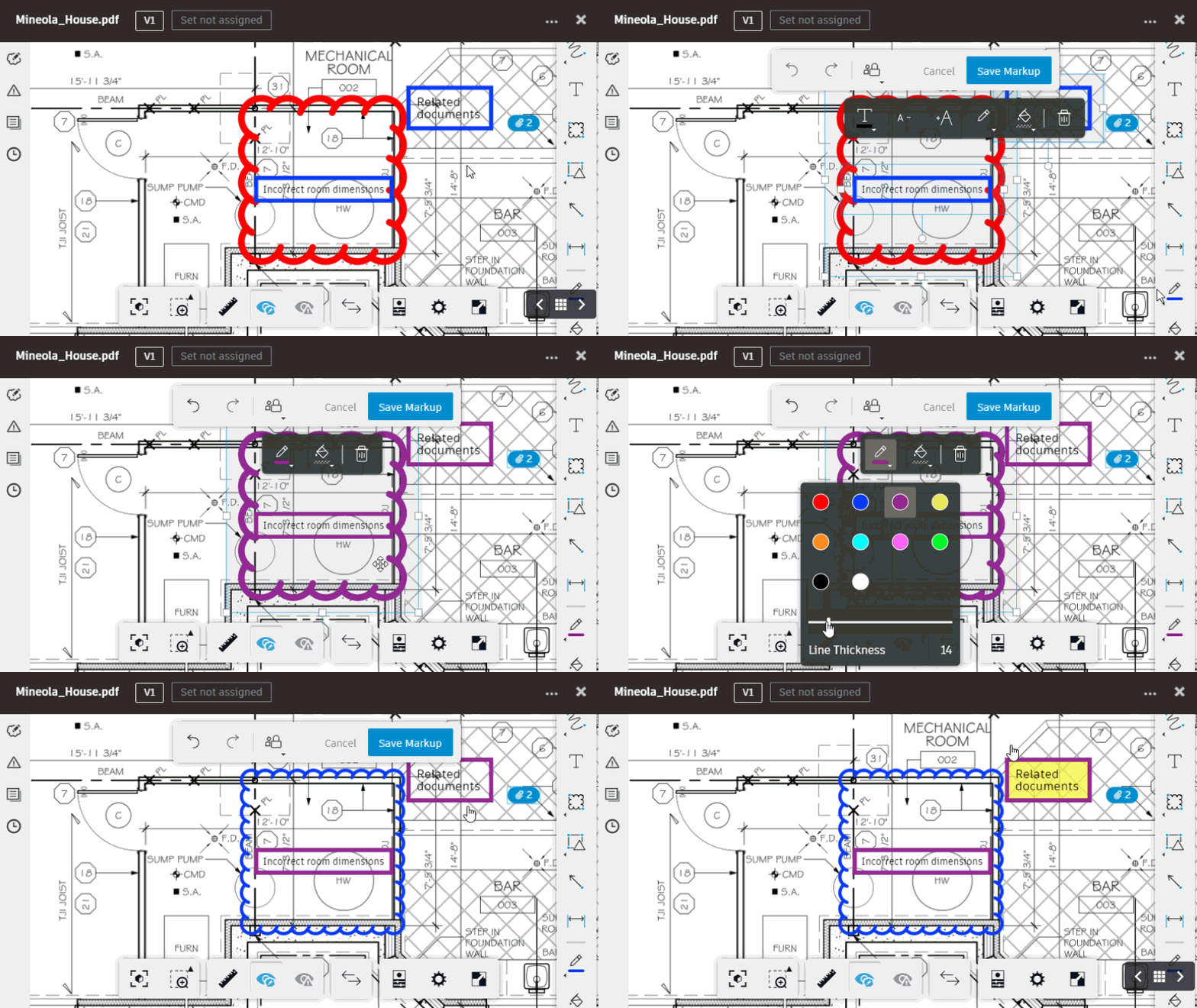
Create markups and comments directly on models and drawings.
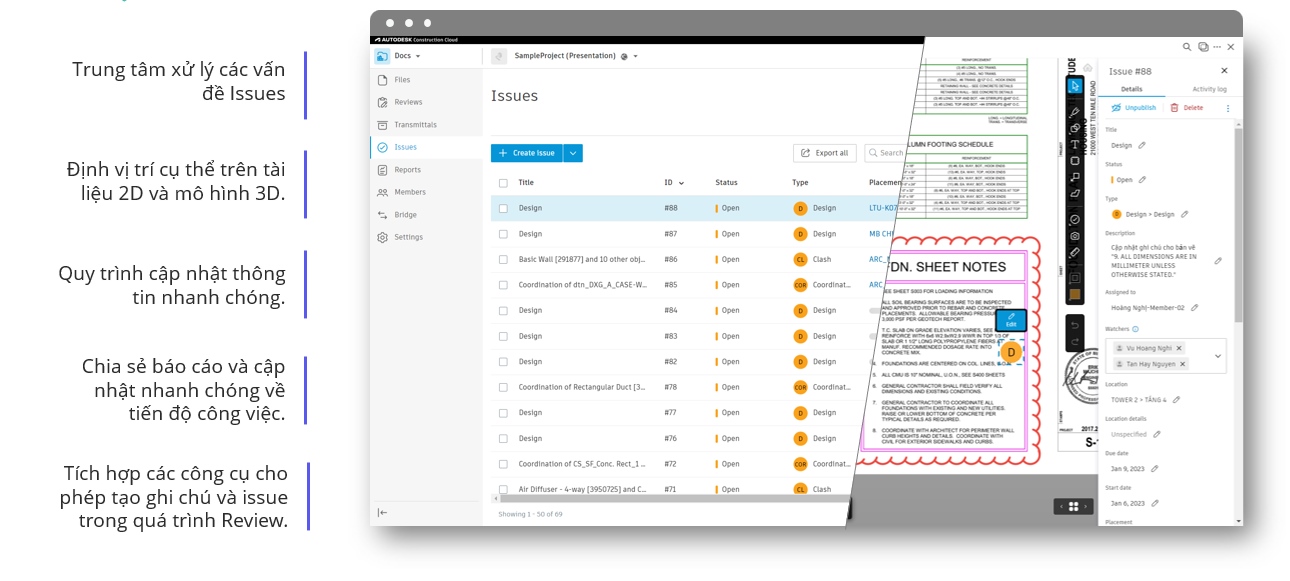
Issue Management Center
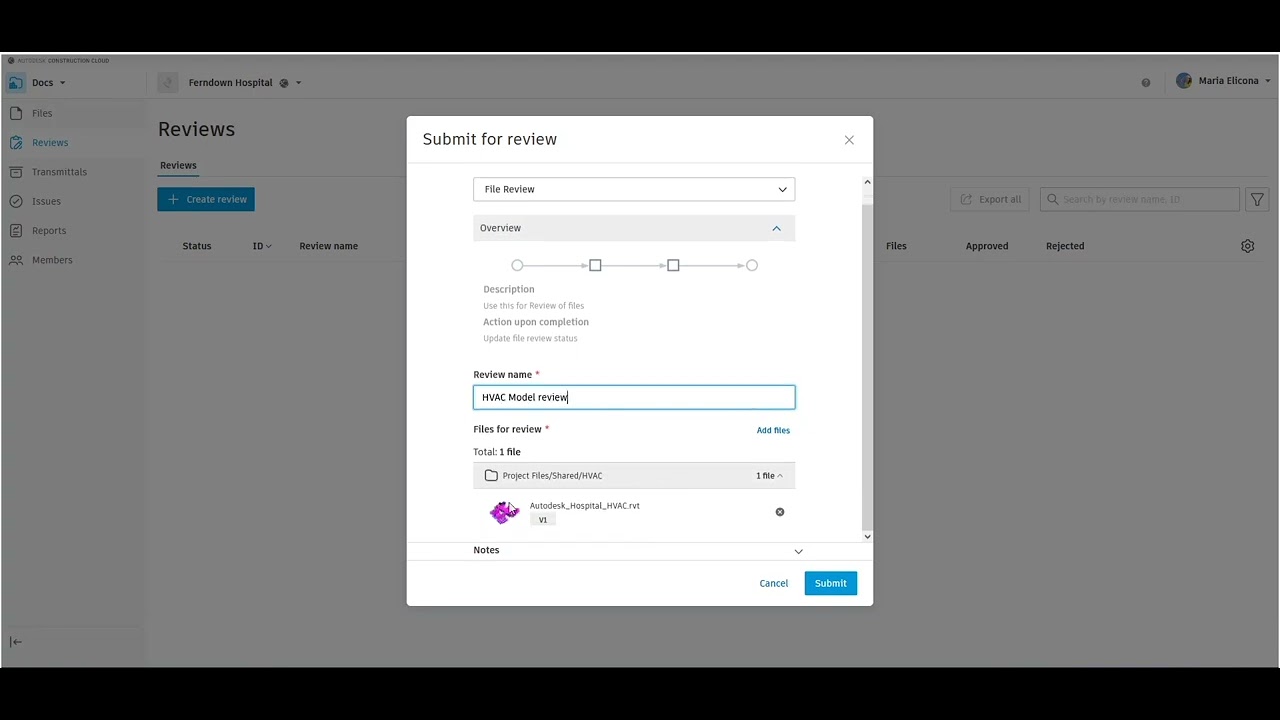
Create and approve submissions and review requests
CConstruction and As-Built Phase
C.1 Digitizing project management and information control during the construction phase
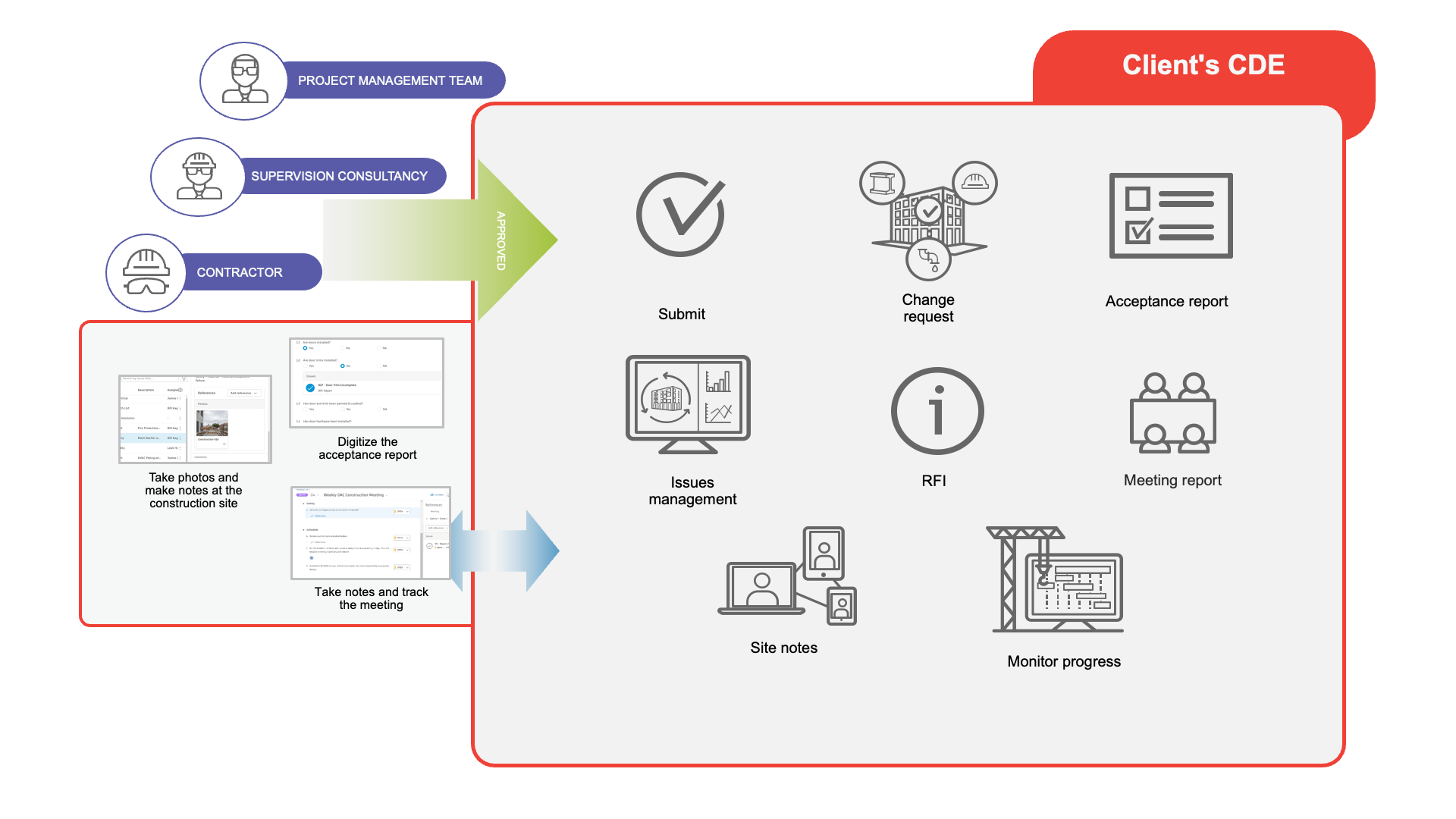
The construction phase involves multiple stakeholders, leading to numerous overlapping information flows. Managing and controlling information during this stage is crucial and challenging.
The CDE provides a connected environment for managing issues, RFIs, meetings, and submissions, enabling project progress tracking and seamless information synchronization between the office and the construction site.
At this stage, the contractor and other construction-related entities will join the CDE to update and manage project-related information.
Achieved Outcomes:
- Digitized project management, ensuring control and storage of all project-related information throughout the construction phase.
- A centralized and transparent communication environment for all project stakeholders.
- Ownership of construction phase data by the investor and project management unit.
- Tracking of model updates throughout the construction phase.
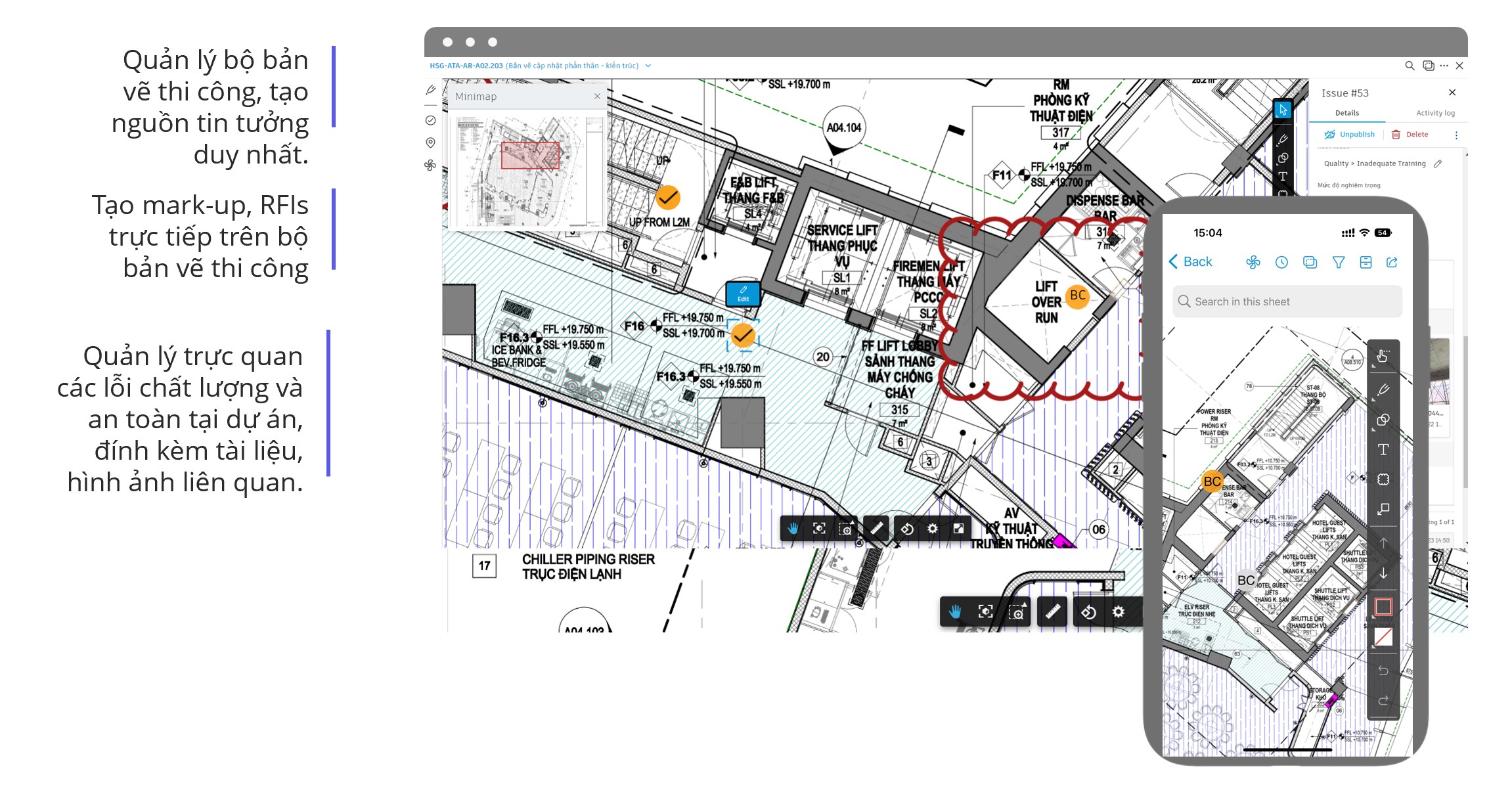
Construction Drawing Management
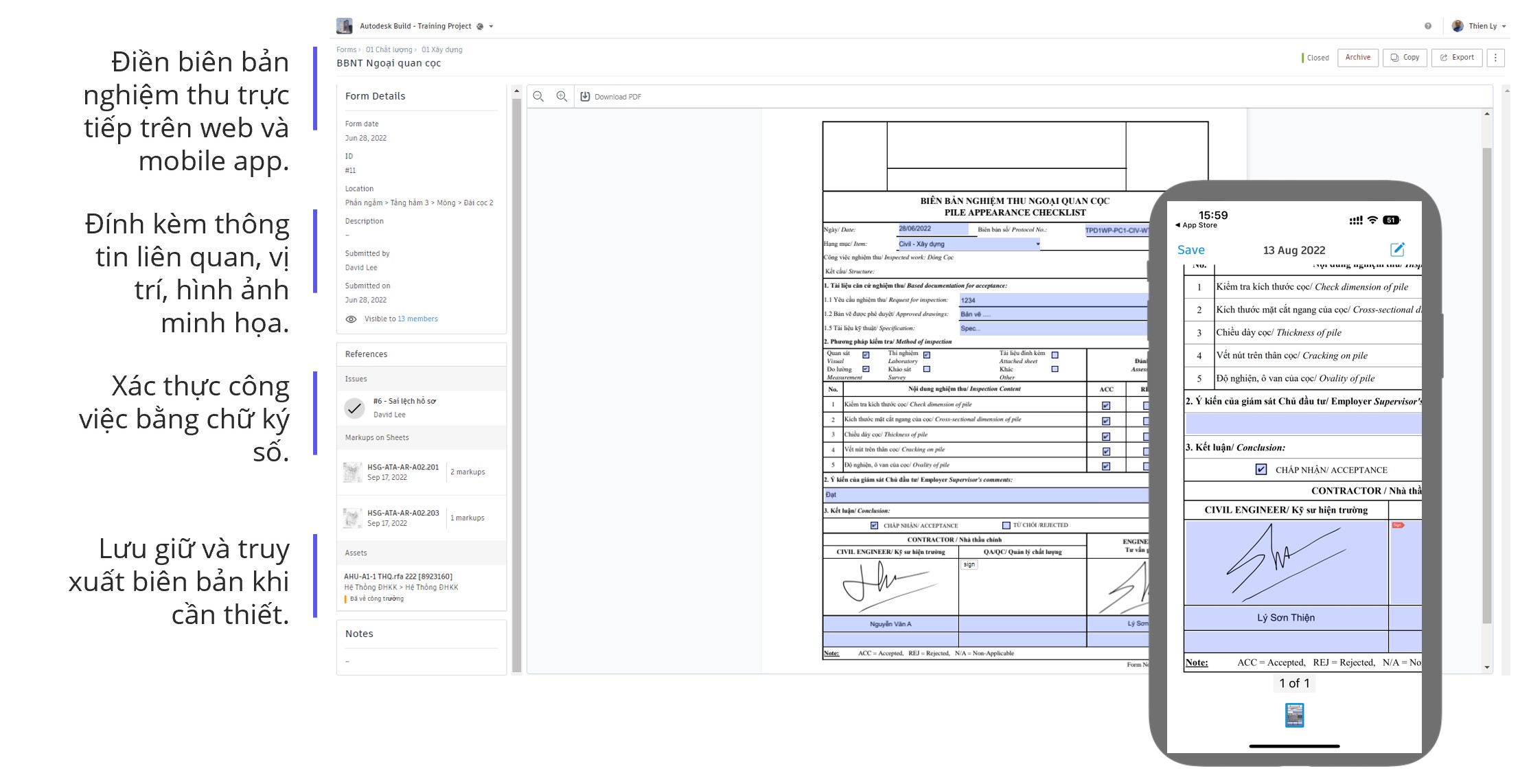
Digitizing Acceptance Records
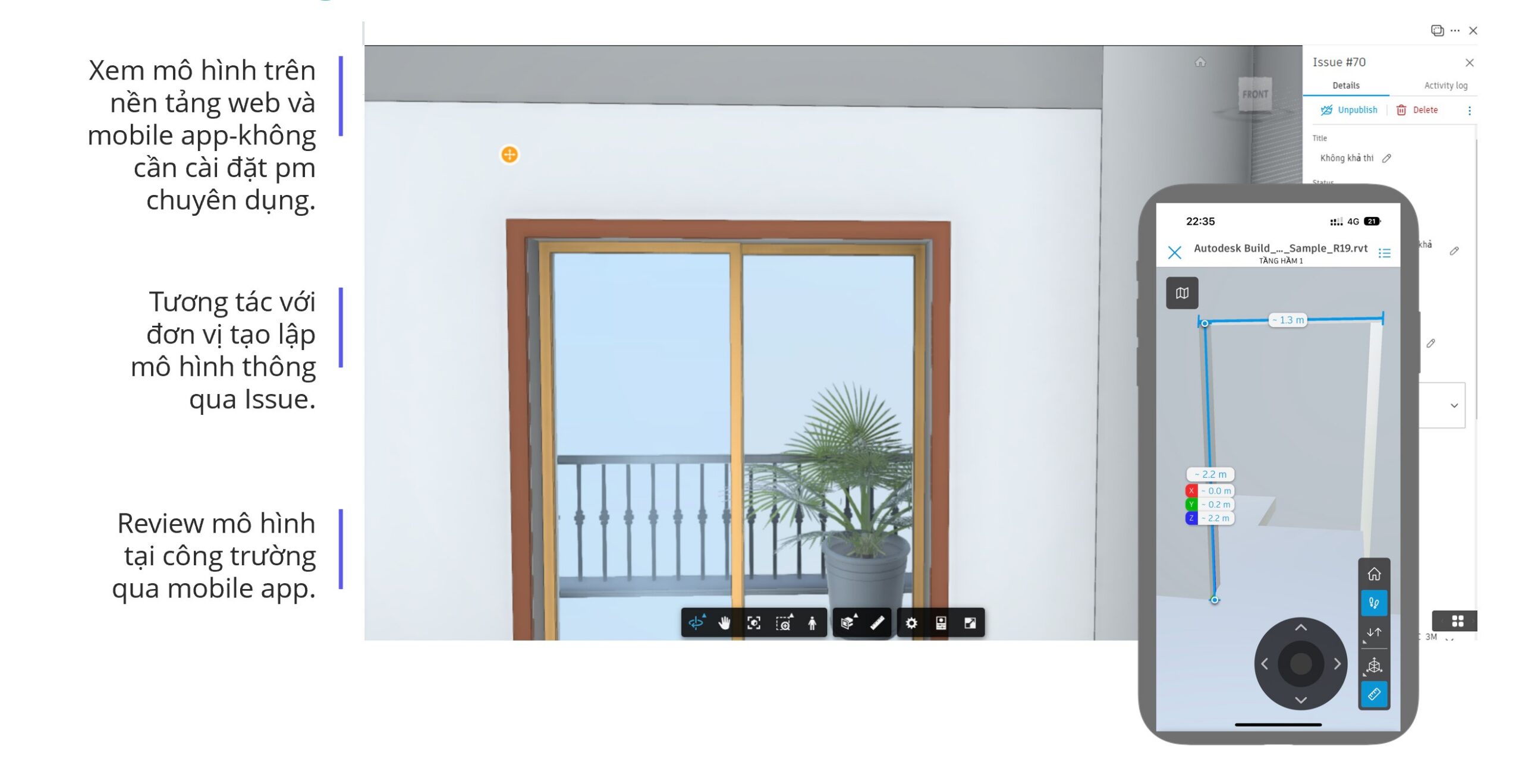
Review BIM models directly on-site
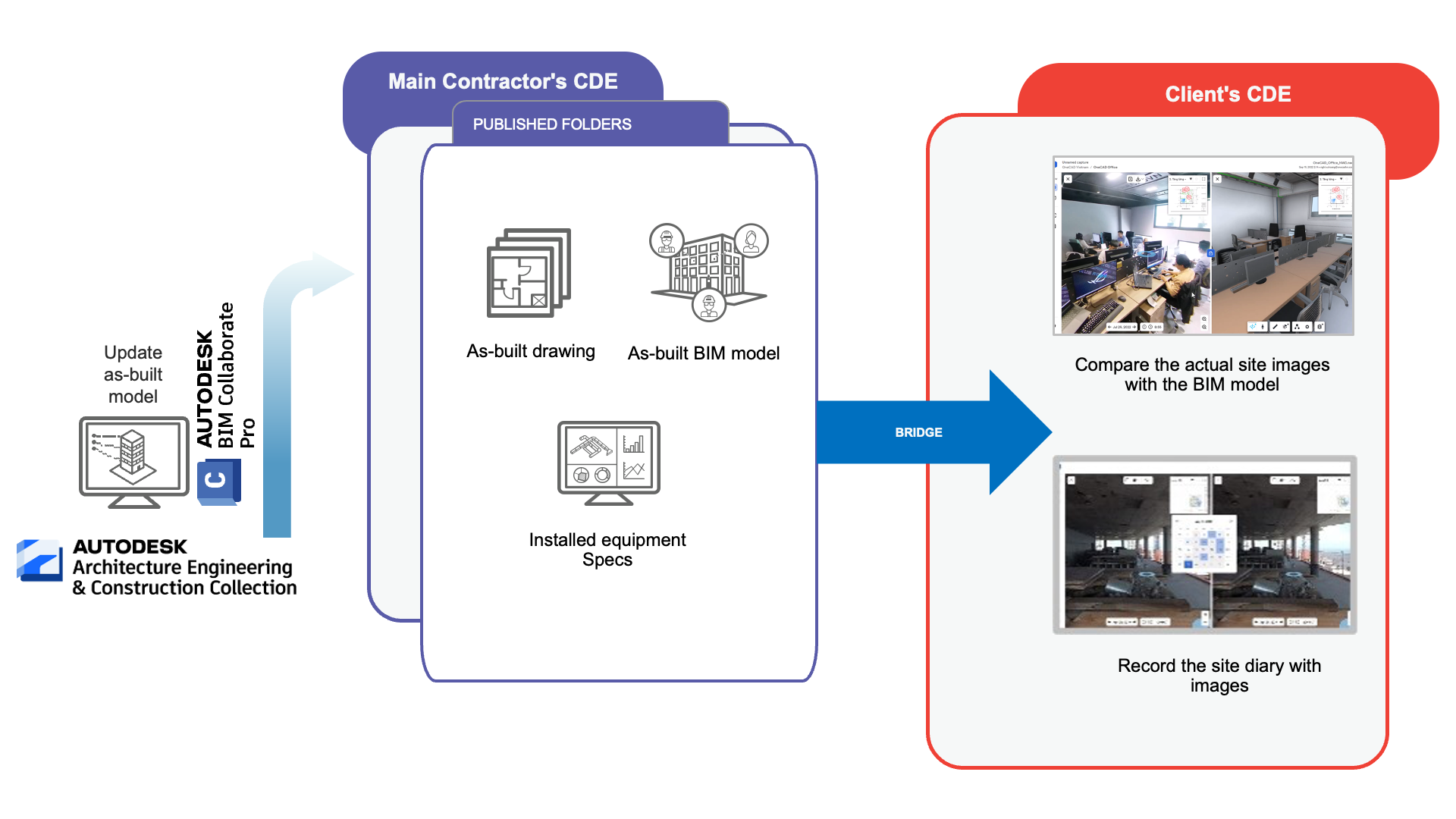
C.2 Update as-built BIM models, monitor progress, and compare using visual documentation.
The as-built model and documentation can be continuously updated throughout the construction process. The project can also integrate solutions to record site progress with visual logs and compare these images with the BIM model.
Achieved Outcomes:
- The as-built model closely aligns with the actual construction
- Record visual documentation of project progress
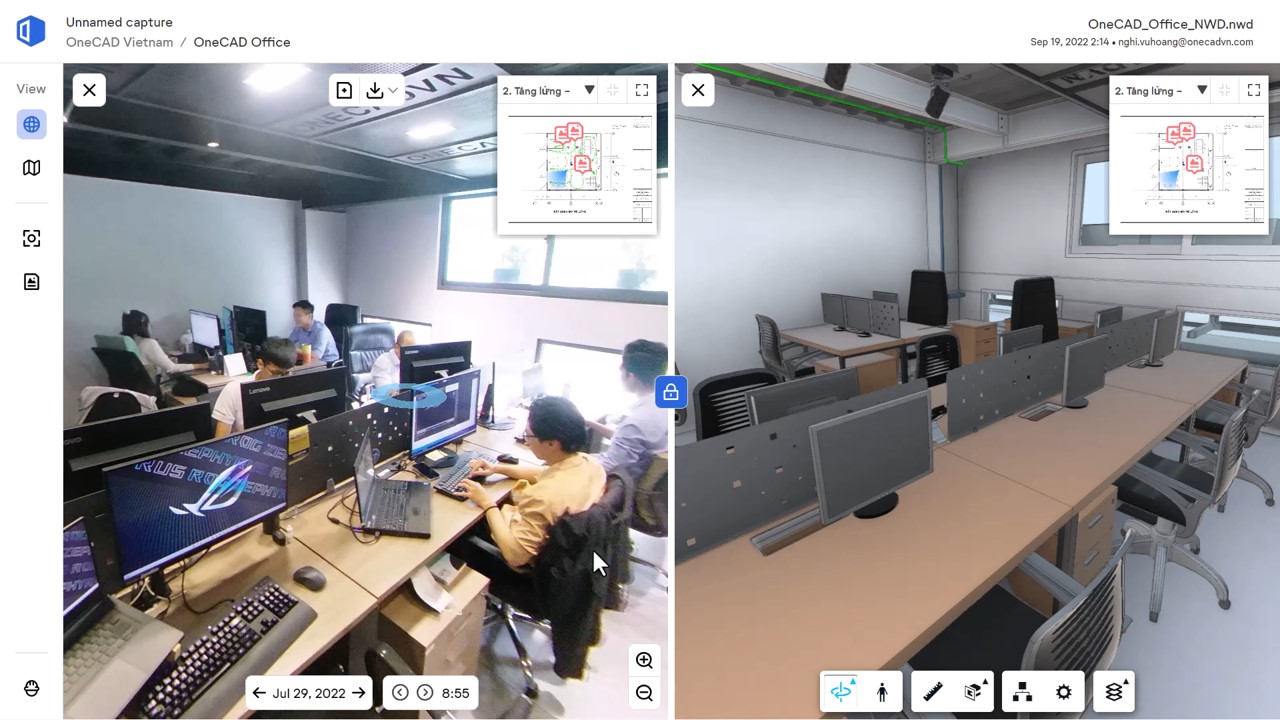
Visually compare the actual construction status with the BIM model
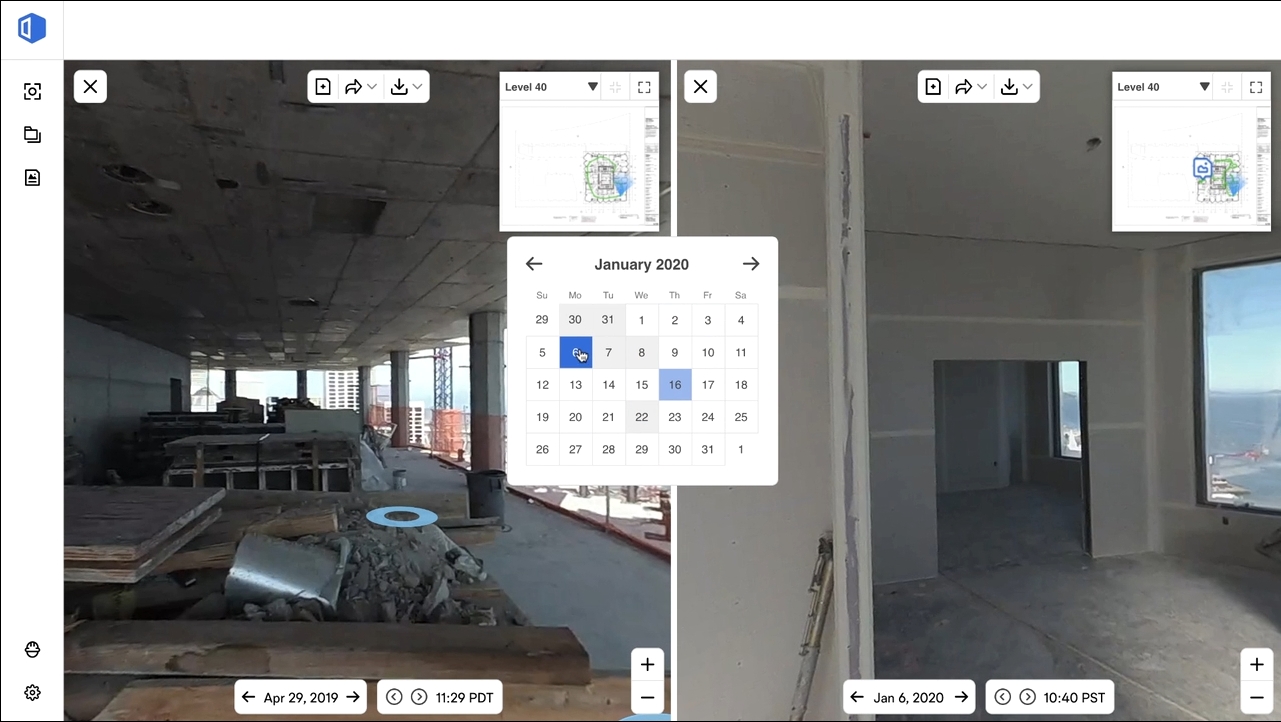
Capture site logs with 360-degree images
C.3 Project Handover
The handover of as-built documentation and project closure becomes much simpler with CDE implementation, as all required data has been systematically updated throughout the process.
The investor owns a digital twin of the project, serving as the foundation for asset management during the operational phase.
Achieved Outcomes:
- Comprehensive as-built documentation, including all relevant files and communication history.
- A fully updated digital twin of the project.
D Operation Phase
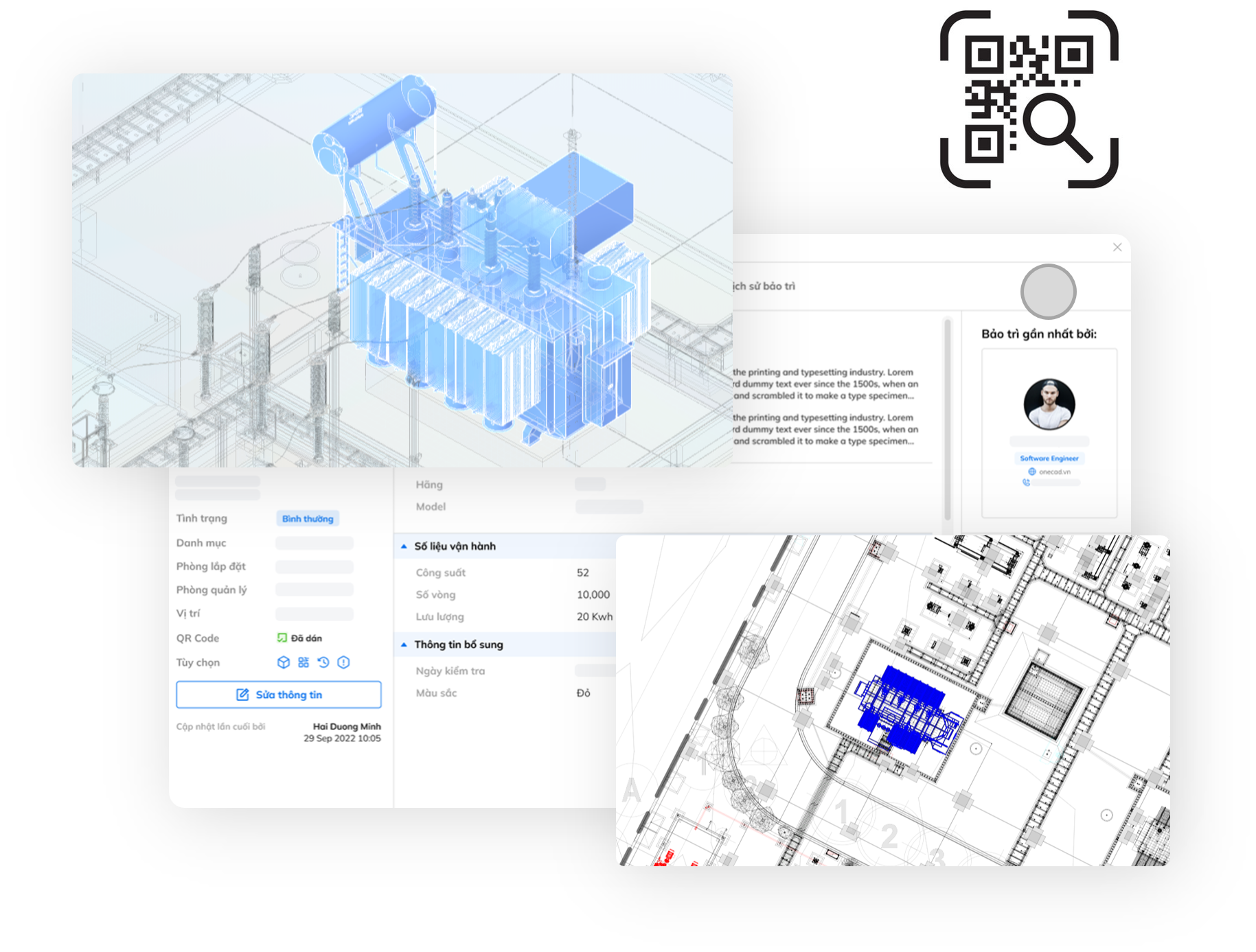
The investor implements the as-built model received during the handover phase into an asset management system based on BIM.
The system will assist The investor and operations management teams in leveraging both geometric and non-geometric information from the BIM model, while also allowing for the addition of new data throughout the operational phase.
Achieved Outcomes:
- Ability to extract information from the as-built BIM model.
- The investor and operations team can continue updating asset-related information.
- Creation of a centralized communication environment surrounding the asset.
- Development of a platform that can integrate with IoT systems, surveillance cameras, and more.
Related products

Autodesk Forma Data Management
Cloud-based document management and common data environment. Autodesk Forma Data Management is now available in the AEC Collection or as a standalone product.

Forma Design Collaboration
BIM Collaborate Pro enables project teams to organize, execute design intent, and assess constructability by managing the entire coordination and design collaboration process on a single platform.

Forma Build
Autodesk Build is a cloud-based platform accessible from any device, enabling project teams to collaborate and stay connected regardless of their location.